|
Vielfalt des Regenwaldes
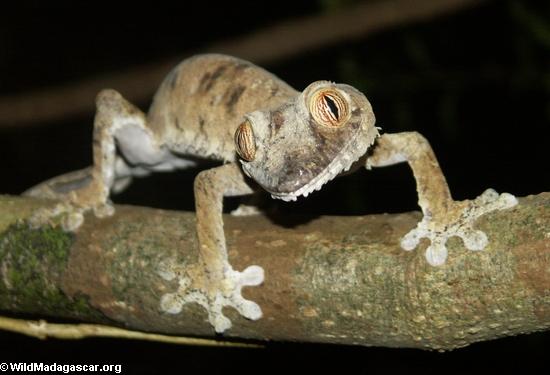 Blattschwänziger Gecko im Regenwald von Madagaskar. (Photo von R. Butler) Blattschwänziger Gecko im Regenwald von Madagaskar. (Photo von R. Butler)
REGENWALDVIELFALT - URSPRÜNGE UND IMPLIKATIONEN Tropische Regenwälder unterstützen die größte Vielfalt an lebenden Organismen auf der Welt.
Obwohl sie weniger als 2 Prozent der Erdoberfläche bedecken, beherbergen sie ca. 50% allen Lebens auf dem Planeten. Die ungeheure Anzahl an Geschöpfen die tropische Regewälder bewohnt, ist so groß - schätzungsweise 5-50 Mio. Arten - dass sie schier unbegreiflich ist. Allein diese Anzahl zeigt, wie begrenzt unser Wissen über diese Wälder ist. Beispielsweise werden gemäßigte Wälder meist nur von einem halben Dutzend Baumarten beherrscht oder weniger, die 90 % der Bäume in diesem Wald ausmachen, während es in einem tropischen Regenwald mehr als 480 Arten auf einem einzigen Hektar gibt. Ein einziger Busch im Amazonaswald kann mehr Ameisenarten aufweisen als die britischen Inseln. Die Vielfalt der Regenwälder ist nicht willkürlich entstanden, sondern das Ergebnis einer Reihe einzigartiger Umstände.Porträts der Vielfalt Länder mit der höchsten Biovielfalt Was ist Biovielfalt?
Biovielfalt - Abkürzung für biologische Vielfalt - sind die Anzahl und Typen der Organismen in einem Ökosystem, einer Region oder Umgebung.
[Englisch | Spanische | Franz�sische]
Fortsetzung: Rolle des Klimas, der Sonnenenergie und Stabilität
Letzte Nachrichten über Regenwaldbewohner
[alle Nachrichten zur Biovielfalt]
[an error occurred while processing this directive]
Mehr Nachrichten zur Biovielfalt
|
|
 |
|
MONGABAY.COM
Mongabay.com versucht das Interesse und die Wertschätzung der Wildnisse und ihrer Tierarten zu fördern , und zu erforschen wie sich Trends und Veränderungen im Klima, in der Technologie, in der Volkswirtschaft und in Finanzen auf die Umwelt und die Entwicklung auswirken.
|